
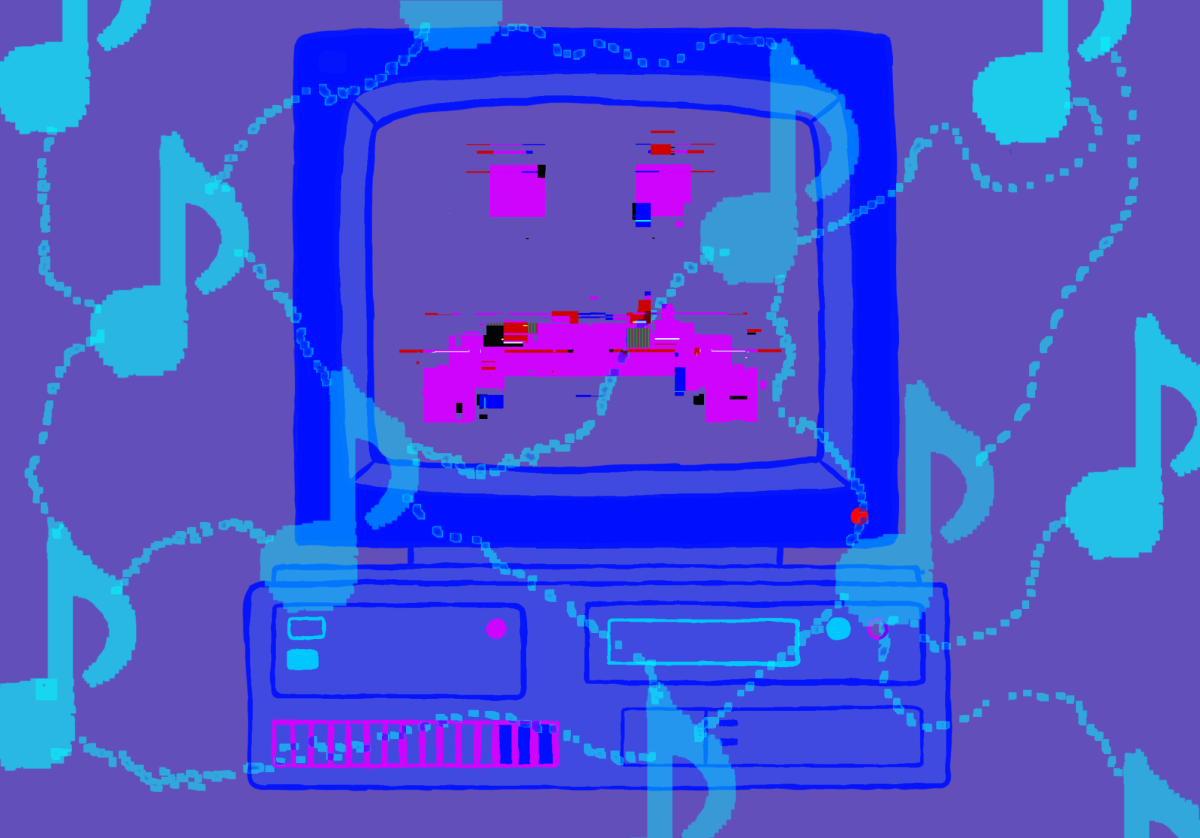
One of the biggest trends on Tiktok in late 2025 was creating silly AI songs. When the song “We Are Charlie Kirk” by an AI artist Spalexma swept the app, everyone laughed. While we were laughing, however, it was uploaded to Spotify and quickly got streams as people played it jokingly for their friends. The lack of outrage was upsetting; when did we become okay with AI slop being readily available for consumption and monetization?
Unfortunately, AI in the music industry has been slowly creeping up on us. In 2023, one of the most famous bands, The Beatles, released a new song called “Now and Then.” The song was made through an AI bot piecing together and clearing up John Lennon’s voice to compose the song. It was surprising to see The Beatles–a band who has been broken up for 50 years at this point–release a single especially when this single used AI.
There’s an ethics issue behind this if this method of “making” music. Popular bands whose main singers that have been dead or broken up can “come back.” Even if we ignore the violation of their legacy, it still gives the opportunity to spread misinformation about said celebrity. Ideals could be put into their songs that they previously disproved or stood against.
On Jan. 7 2026 Universal Music Group, the biggest record label in the world, announced a partnership with Nvidia, the biggest AI generative creator, to make an AI program available for artists to use freely. Nvidia claims that it will be a “responsible AI” only made to help, not fully create, allowing artists to avoid the challenging parts of creating.
This can also clog the output of the music industry making it even harder to break through the barricade of established artists because of the slop blocking the charts. Listeners are prevented from finding these new artists because of the abundance of AI Spotify is allowing on their platform. The name “Xania Monet” has been circling around the internet recently; she’s by far the most popular AI “artist” with 1.2 million monthly listeners on Spotify.
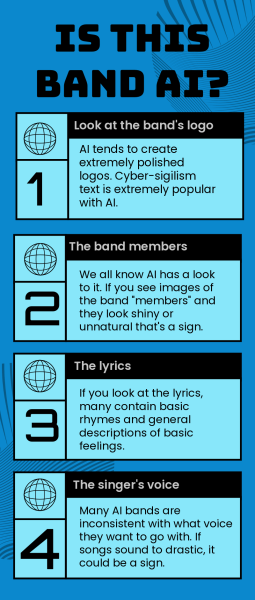
Monet is an AI powered music “artist” but there’s a real person behind her. Telisha “Nikki” Jones is the woman who controls Monet. Jones writes all of the lyrics of her songs. She then uses AI to turn her poems into songs. Xania Monet (Jones) has been on Billboard charts which helped her secure a multi-million dollar deal with Hallwood Media.
Proponents of AI music creation argue that programs like Sora allow for people who never get the chance to create to do so.
But part of making art is the struggle.
The mistakes make the pieces and the learning process shows human growth and achievement. AI art, music and creations don’t have the soul that any human made art has. It lacks personality that human made pieces have.
Music videos are also being created using AI.
The up and coming band Katseye credits the video for their new single “Internet Girl” to 351 Studio, an AI video production company. Not even video productions are safe from AI.
The power behind a music video can change how one views a song. It’s a visual aid for many to help understand what the artist means and can accent thematic elements within the music. Like AI music, when music videos are created by AI, they lose the power they could have had. Music videos are already rapidly declining. Many fans would rather have a lower budget meaningful music video than one that uses AI.
No matter what the future of AI is, one thing will stay the same: AI will never compare to the struggle of creating meaningful, human art.


Oliver • Feb 3, 2026 at 10:46 am
You are so talented diva