
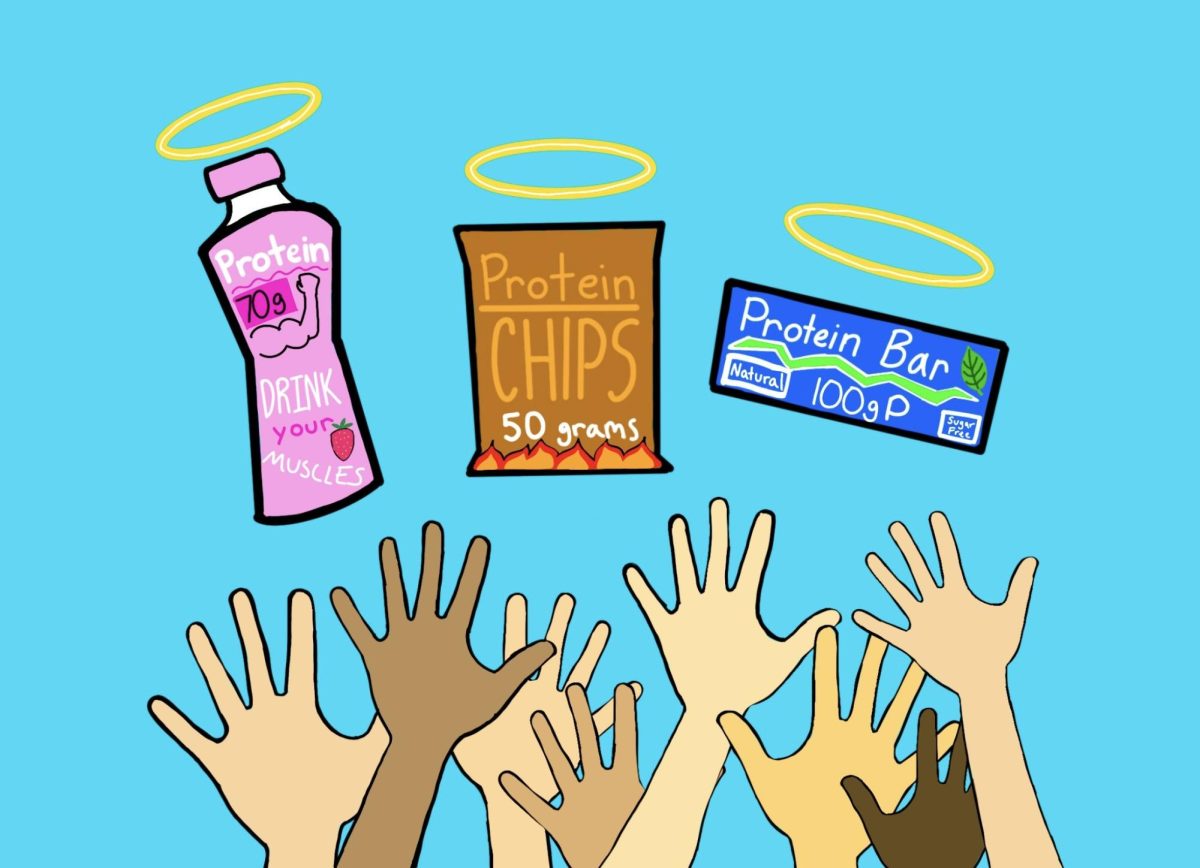
Protein popcorn. Protein chips. Protein PopTarts. Protein coffee. Protein water. Nowadays, it’s hard to find any products without a huge “PROTEIN” written across the front of the packaging. Protein shakes and powders used to be attributed to mainly gymgoers and bodybuilders, but everyday people in 2026 are filling their pantries with the “proteinized” versions of snacks.
But why protein? Protein helps repair your body’s cells and tissues and make new ones. When it is digested, it is broken down into amino acids. Amino acids are necessary to maintain good health. They are vital for repairing tissues, breaking down food, and providing energy. Protein helps your muscles recover after using them. That’s why weightlifters require more; they train and work their muscles regularly. But the human body requires many other nutrients that are just as necessary as protein.
Other nutrients such as fiber, carbohydrates and lipids (fats) are just as important as protein. Fiber supports digestion and gut health. Carbohydrates are the body’s main source of fuel and help give you energy. Lipids are necessary for the absorption of vitamins, can help control your cholesterol levels and transport and store energy. Why is protein being singled out?
The main perpetrators of this new fad are social media influencers. Many of the purchases we make, places we go, and things we do are influenced by what we see online. This is the case with today’s protein engrossment. Throughout the past year, hundreds of influencers have started promoting the high protein diet by sharing recipes, promoting products and preaching its benefits. Why do they want protein so much? It all has to do with society’s “ideal” body type and a push for health and fitness.
Between 2008 and 2018, the number of gym memberships grew by 37.1 percent. According to GymMaster, by 2019, global industry revenue totaled US$96.7 billion worldwide, which then grew to $124.7 billion by 2024. The idea of a certain body type often drives this. Many fitness trends are based on achieving the “ideal body,” which has changed a lot throughout the generations. In our society today, many people are striving for a toned but lean composition with low body fat and defined muscles. But overall, people are just interested in living a healthy lifestyle through exercise and diet. And high-protein has been promoted as the way to do this.
Corporations have seen this new interest, and decided to take advantage of it. All sorts of new protein products are hitting the market everyday, and consumers cannot get enough. The number of high protein shakes and drinks on the market rose by 122 percent from 2020 to 2024, Innova Market Insights reported. According to CNBC, the company, Protein Pints, began producing “protein ice cream” in 2023, and is on track for more than $20 million in revenue in 2025. CNBC also reported in 2024 that General Mills generated more than $100 million in retail sales from its protein cereal lines, including Nature Valley Protein, Cheerios Protein and Ghost Protein. Fast food companies are also cashing in on the hype.
An example is Chipotles’ new “High-Protein” menu where all the extra protein comes from simply doubling the amount of meat. “Using a large font on something like ‘20g of Protein’ will grab attention and potentially increase sales,” Joan Mitchell, Business and Marketing teacher at Olathe West said. None of Chipotle’s high protein items are new, they just have a huge high-protein label slapped on them to attract more protein-seeking buyers. That is one of the most common marketing strategies companies use.
Companies also rely heavily on social media to advertise. “People tend to trust influencers because they seem like normal people. So, brands pay influencers to use or recommend their products,” Mitchell said.
The combined hype by social media influencers and deceiving marketing by brands has convinced many people that products with extra protein are the healthier choice. This isn’t always the case, though.
To increase protein in a product, companies have to modify the rest of ingredients. To create pleasant textures and flavors, manufacturers include additives like inflammatory oils, sweeteners, fillers and thickeners. According to MedicalNewsToday, oftentimes sugar, saturated fats and carbohydrates all have to be altered, which can lead to a more unhealthy product. Some protein powders and products that are not FDA approved can contain harmful toxins such as lead, mercury and arsenic.
Another problem comes from when we consume more protein than your body requires. Once you reach your body’s protein needs, all extra protein becomes stored as fat, because your body already has enough of it. Extra protein could also lead to higher cholesterol levels in your blood and possibly affect your kidney function. A common occurrence with the high-protein diet is that protein becomes prioritized over other nutrients essential to our health. Getting a sufficient amount of protein isn’t healthy if you aren’t also getting enough fiber, carbohydrates and fats along with it.
We don’t need to demonize protein powders and products; however, we should be more aware of the misinformation and marketing that brands and social media influencers feed us about protein. Trying to prioritize natural plant and animal protein sources and paying attention to all of our other nutrient needs is truly the key to living a well-balanced, healthy lifestyle.